


Differential Technologies

Fisaude Occasion

Best Deals

Our Kinefis products

News

Offers

Outlet

Fisaude Tech Academy
Physiotherapy
Chiropody
Aesthetics, dermocosmetics and aesthetic medicine
Wellness, quality of life and body care
Odontology
Medical equipment
Chinese traditional medicine
Clinical furniture
Therapeutic cabinets
Essential protection material for coronaviruses
Aerobics, fitness and pilates
Sports and games
Sanitary wardrobes
Veterinary
Orthopedics
Surgical instruments (clearance)
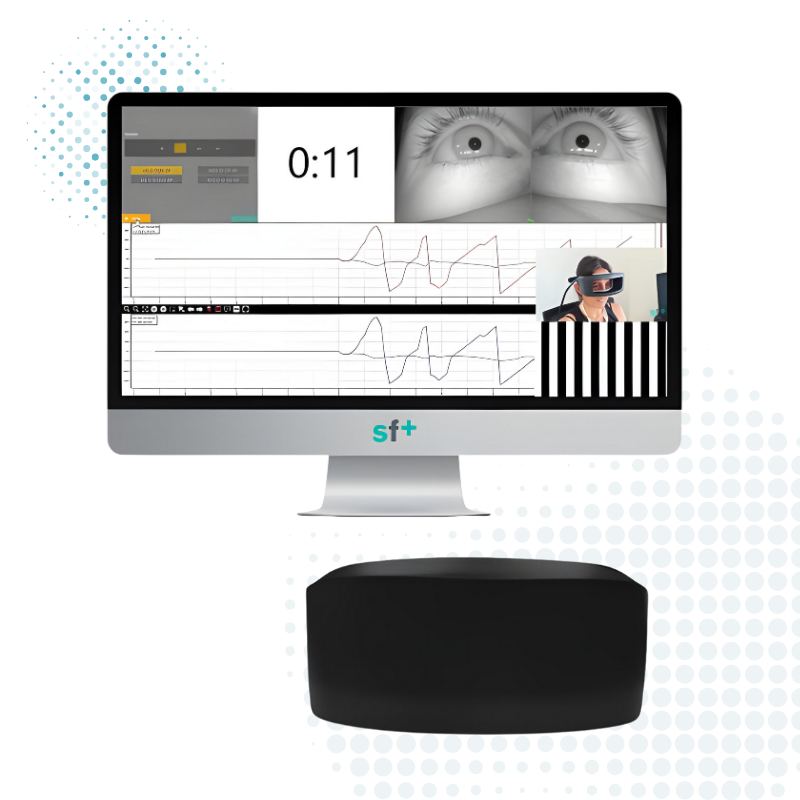
Balance Eye: Videonystagmography (VNG) System for vestibular diagnosis
 Warranty is 2 years
Shipping in 3-5 days approx.
Description
The Balance Eye is an advanced medical videonystagmography (VNG) system designed for comprehensive diagnosis of balance and vestibular disorders through eye movement analysis. The device combines lightweight hardware with intuitive software , offering a portable, accurate, and user-friendly solution for clinics , laboratories, and mobile environments.
Everything you need for vestibular testing, simplified. Exceptional value, without compromise.
Balance Eye offers premium diagnostics at a price accessible to any clinic . You'll get a complete vestibular assessment system (glasses, software, remote control, and accessories) for less than the cost of many single-function alternatives. Accurate results and reliable performance, wherever you practice.
Why Balance Eye?
Everything you need for vestibular testing, simplified.
Complete balance assessment
Balance Eye includes a comprehensive set of diagnostic tests to assess vestibular function.
Complete balance assessment
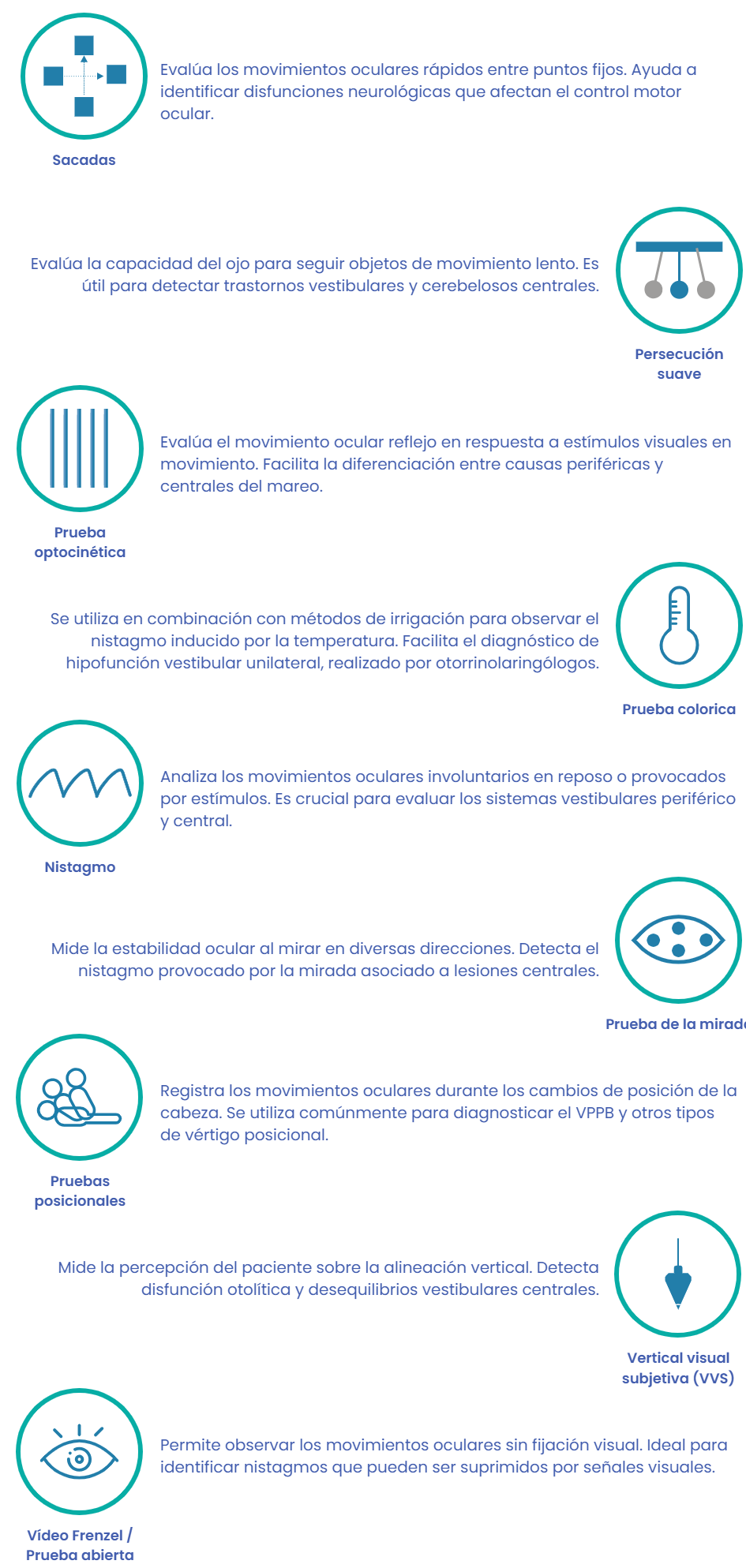
Balance Eye includes a comprehensive suite of diagnostic tests to assess vestibular function
Main functions
Complete evaluation of the vestibular system through:
- Saccadic analysis
- Smooth Pursuit
- Optokinetic tests
- Nystagmus
- Caloric tests
- Gaze test (sustained gaze)
- Positional tests
- Subjective Visual Vertical (SVV)
- Frenzel Video / Open Test
These tests allow differentiation between peripheral and central causes of dizziness, as well as evaluating oculomotor and vestibular functions with high precision.
Basic Staffing:
- Diagnostic glasses with dual infrared camera
- Magnetic front visor
- “Air mouse” type remote control
- USB and HDMI cables
- Analysis and reporting software
- Compact carrying case
The entire system is plug-and-play and ready for immediate clinical use.
Software and workflow
Intuitive testing and analysis software designed to simplify diagnostics and improve your workflow.
Real-time graphics and visualizations
Automatic and exportable reports
Compatible with secondary monitors for visual stimulation
Key technical specifications
Capture technology: integrated infrared cameras
Connectivity: Connection via a single USB cable (no external power supply required)
Glasses weight: approx. 350 g — lightweight and portable
Additional requirements: secondary monitor for visual testing (not included)
Certifications: CE marking and compliance with IEC 60601 safety standards for medical devices
Clinical applications
The Balance Eye is indicated for professionals and centers that perform diagnoses of:
Vertigo and positional vertigo
Dizziness of vestibular origin
Central and peripheral balance dysfunctions
Oculomotor assessment in neurology
Vestibular rehabilitation follow-up
Typical users:
Otolaryngologists (ENT)
Audiologists
Neurologists
Vestibular physiotherapists
Clinical technicians under medical supervision
Key advantages
Portable and compact: ideal for clinics, home visits or mobile units.
Comprehensive diagnosis: multiple clinical protocols in a single device.
Quick installation: just plug in and start testing.
Accurate and reproducible results: suitable for differential diagnoses.
Frequently Asked Questions:
1. Does Balance Eye have CE certification?
Yes. Balance Eye is CE certified and meets IEC 60601 medical device safety standards.
2. What tests are included?
The system includes 9 basic protocols: saccades, smooth tracking, optokinetics, gaze, nystagmus, positional, subjective visual vertical (SVV), Frenzel video, and caloric support.
3. How many cables do I need to connect?
Just one. The Balance Eye connects to your computer via a single USB cable; it requires no external power supply.
4. Is the setup process lengthy?
Not at all. Simply plug it in, launch the software, and you're ready to go. Calibration and patient setup are intuitive and quick.
5. Is the system heavy or bulky?
No, it isn't. The Balance Eye glasses weigh approximately 350 grams, making them lightweight, compact, and easy to handle, both in a fixed and portable position.
6. Do I need additional hardware?
You will only need a secondary monitor (such as a television or external screen) to project the visual stimuli used during certain protocols. The rest of the setup is included.
7. Can I use the Balance Eye for home visits or remote testing?
Yes. The system is fully portable, compact, and fits in the included carrying case for on-the-go diagnostics.
8. Do I need a dark room to perform the tests?
No. Thanks to the integrated magnetic viewfinder and infrared illumination, visual fixation is effectively blocked, thus eliminating the need for a dark testing environment.
9. Who can use the Balance Eye?
Balance Eye is designed for otolaryngologists, audiologists, neurologists, vestibular physiotherapists, and clinical researchers. Its intuitive interface also makes it accessible to qualified technicians under clinical supervision.