





Differential Technologies

Fisaude Occasion

SUMMER SALE

Our Kinefis products

News

Offers

Outlet

Fisaude Tech Academy
Physiotherapy
Chiropody
Aesthetics, dermocosmetics and aesthetic medicine
Wellness, quality of life and body care
Odontology
Medical equipment
Chinese traditional medicine
Clinical furniture
Therapeutic cabinets
Essential protection material for coronaviruses
Aerobics, fitness and pilates
Sports and games
Sanitary wardrobes
Veterinary
Orthopedics
Surgical instruments (clearance)
Physiosensing Complete Posturography Station: Advanced force platform for balance and vestibular rehabilitation
 Warranty is 2 years
.png "Physiosensing Complete Posturography Station: Advanced force platform for balance and vestibular rehabilitation")
Shipping in 7-10 days approx.
Description
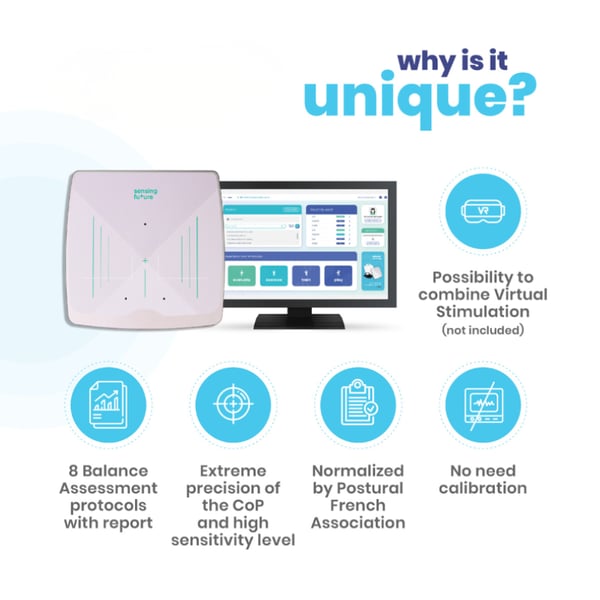
The PhysioSensing Complete Posturography Station is an advanced clinical system for the objective assessment of balance, postural control and fall risk, designed for physiotherapy, vestibular rehabilitation and neurorehabilitation clinics.
It integrates a high-precision stabilometric force platform with specialized clinical software, enabling detailed analysis of the Center of Pressure (CoP), postural oscillation, and the patient's static and dynamic stability. Thanks to its real-time visual biofeedback, it facilitates both clinical assessment and therapeutic balance training.
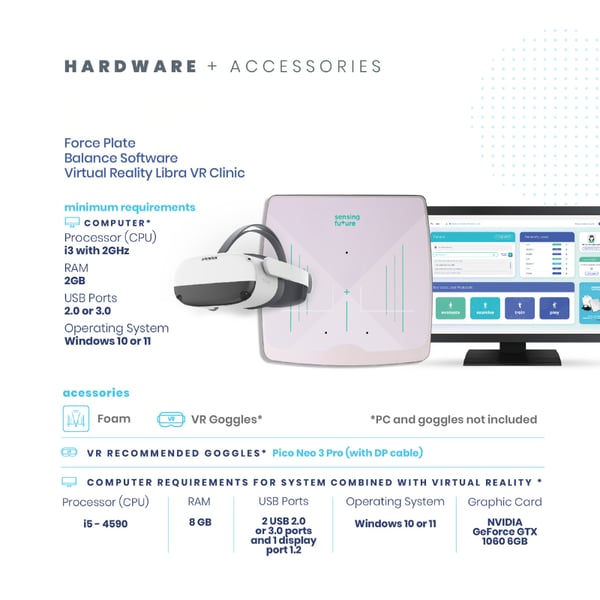
It is a complete “all-in-one” solution that includes platform, software, computer, monitor and cart, ready for immediate use in professional clinical environments.
Clinical applications
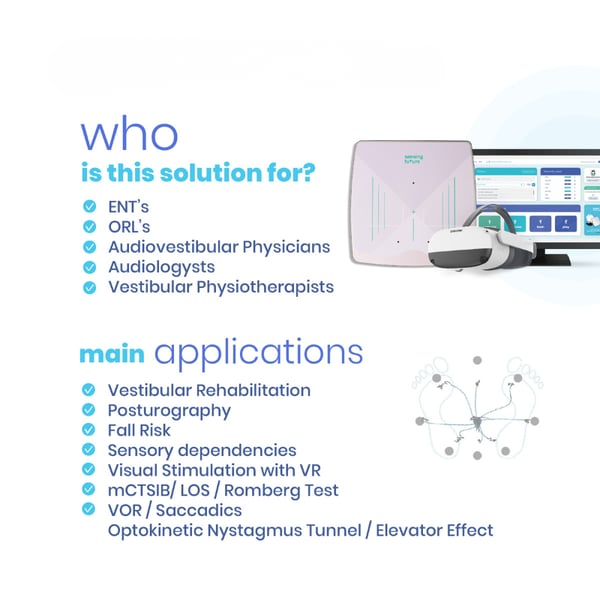
Vestibular assessment and rehabilitation
Balance and postural control analysis
Prevention and detection of fall risk
Neurological rehabilitation (stroke, Parkinson's disease, multiple sclerosis, TBI)
Geriatric and trauma physiotherapy
Objective monitoring of the patient's progress
Sectors of use
Physiotherapy and rehabilitation clinics
Geriatric units
Hospitals and neurology centers
Centers specializing in balance and fall prevention
Sports medicine clinics
Clinical research centers
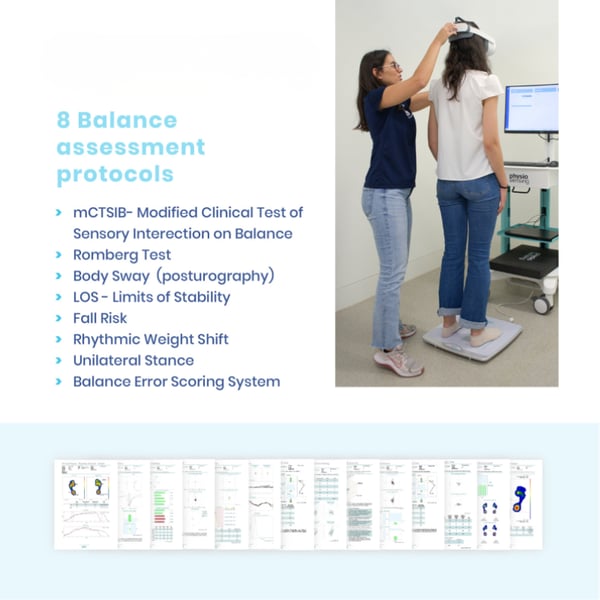
Integrated clinical protocols and trials
Romberg test
mCTSIB (Modified Clinical Test of Sensory Interaction on Balance)
Limits of Stability (LOS)
Postural sway analysis (Posturography / Body Sway)
Fall risk assessment
Rhythmic Weight Shift
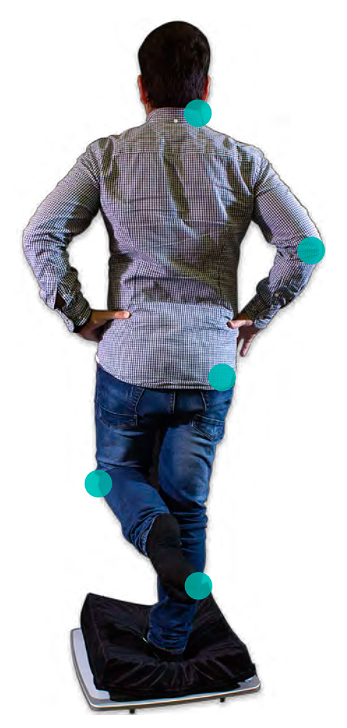
Unilateral Stance
BESS (Balance Error Scoring System)
All protocols generate quantifiable and reproducible results, with detailed clinical reports.
Reports and metrics
The system generates detailed clinical reports, including:
Center of Pressure (CoP) Graphs
Objective balancing parameters
Comparisons by session
Printable and exportable reports
Benefits for the clinic and the professional
Objective and standardized evaluation of balance
Precise measurement of the Center of Pressure (CoP)
Early detection of postural abnormalities
Visual biofeedback that improves patient adherence
Comparative monitoring of therapeutic evolution
Key tool for fall prevention
It brings technological value and differentiation to the clinic
Technical specifications
High-precision stabilometric force platform
Advanced measurement of the Center of Pressure (CoP)
High sampling frequency for reliable clinical analysis
Specific clinical software for posturography
Automatic generation of reports and charts
Interactive system with real-time visual feedback
(Keep the exact technical specifications you already have here: dimensions, maximum weight, resolution, frequency, etc.)
Included equipment
PhysioSensing Posturography Platform
Clinical software for balance assessment and rehabilitation
Computer (PC)
Monitor
Transport and support cart
Accessories required for use
Initial online training (Zoom)
Who is it for?
Physiotherapy and rehabilitation clinics
Vestibular rehabilitation centers
Hospitals and neurology units
Geriatric centers
Clinics specializing in balance and fall prevention
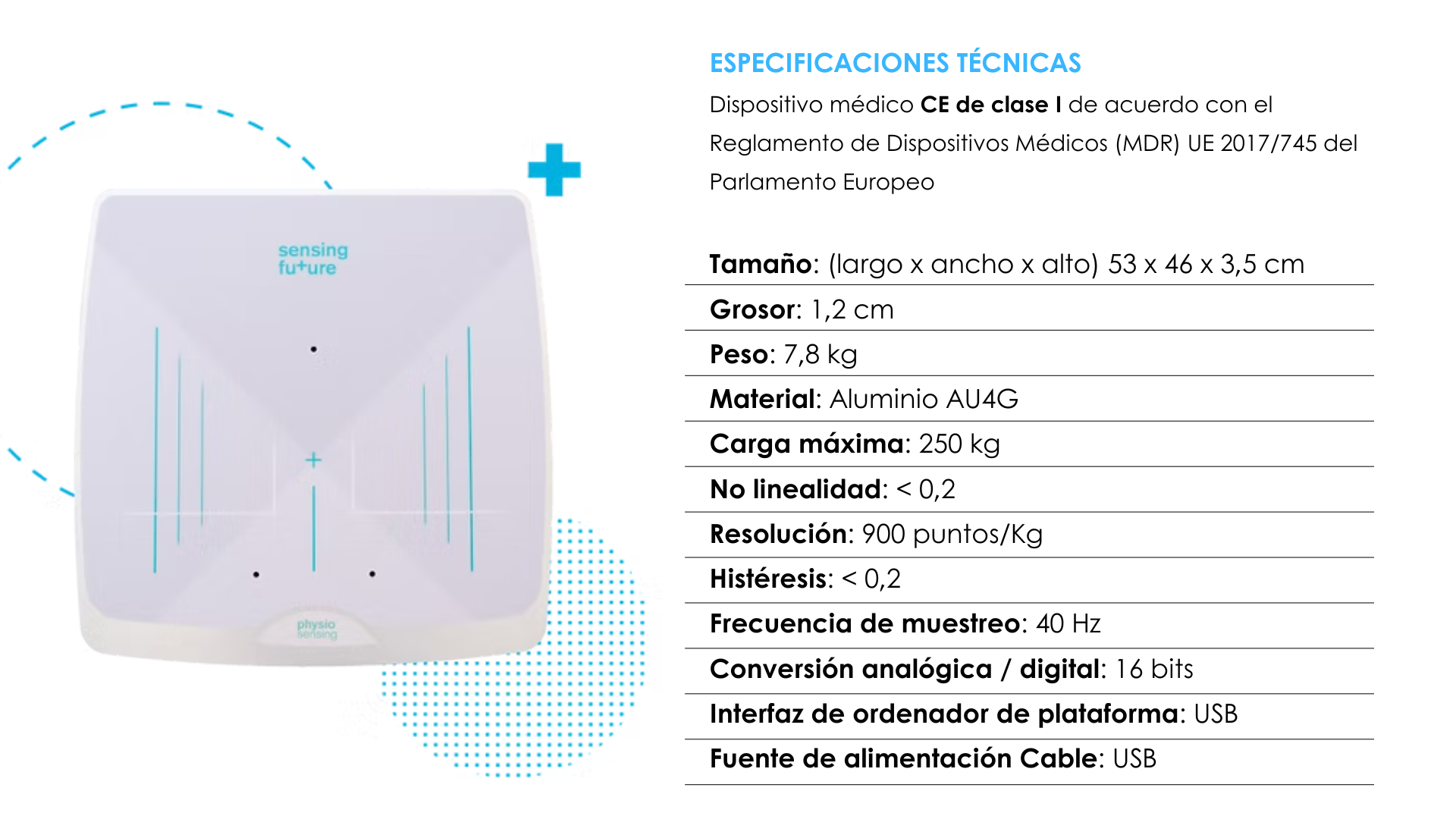
Force platform:
Main benefits
Objective and reproducible assessment of the balance
Real-time visual biofeedback
Personalized training and therapeutic games
Generation of detailed clinical reports
Comparative session tracking
Ideal for fall prevention
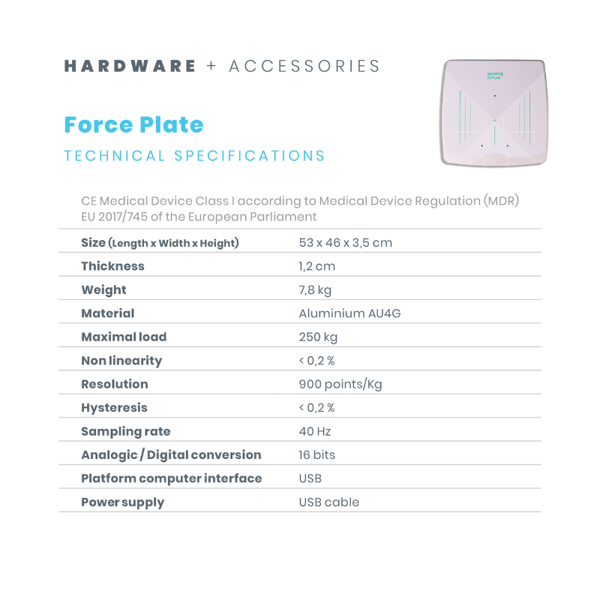
Technical specifications:
- Non-linearity < 0.2%
- Resolution 900 points/Kg
- Hysteresis < 0.2%
- Adjustable sampling frequency from 5 Hz to 40 Hz
- 16-bit analog/digital conversion
- USB platform computer interface
- Power supply USB cable
General specifications
- CE Class I medical device according to directive 93/42/EEC
- Size: (Length x Width x Height) 53 x 46 x 3.5 cm
- Weight 7.8 kg
- Material: Aluminum AU4G
- Maximum load 128 kg
Precision and performance
CoP accuracy 0.1 mm
Resolution 900 points/kg
Non-linearity, hysteresis
40 Hz, 16 bits
Connectivity and requirements
USB
PC requirements (includes processor, RAM, operating system)
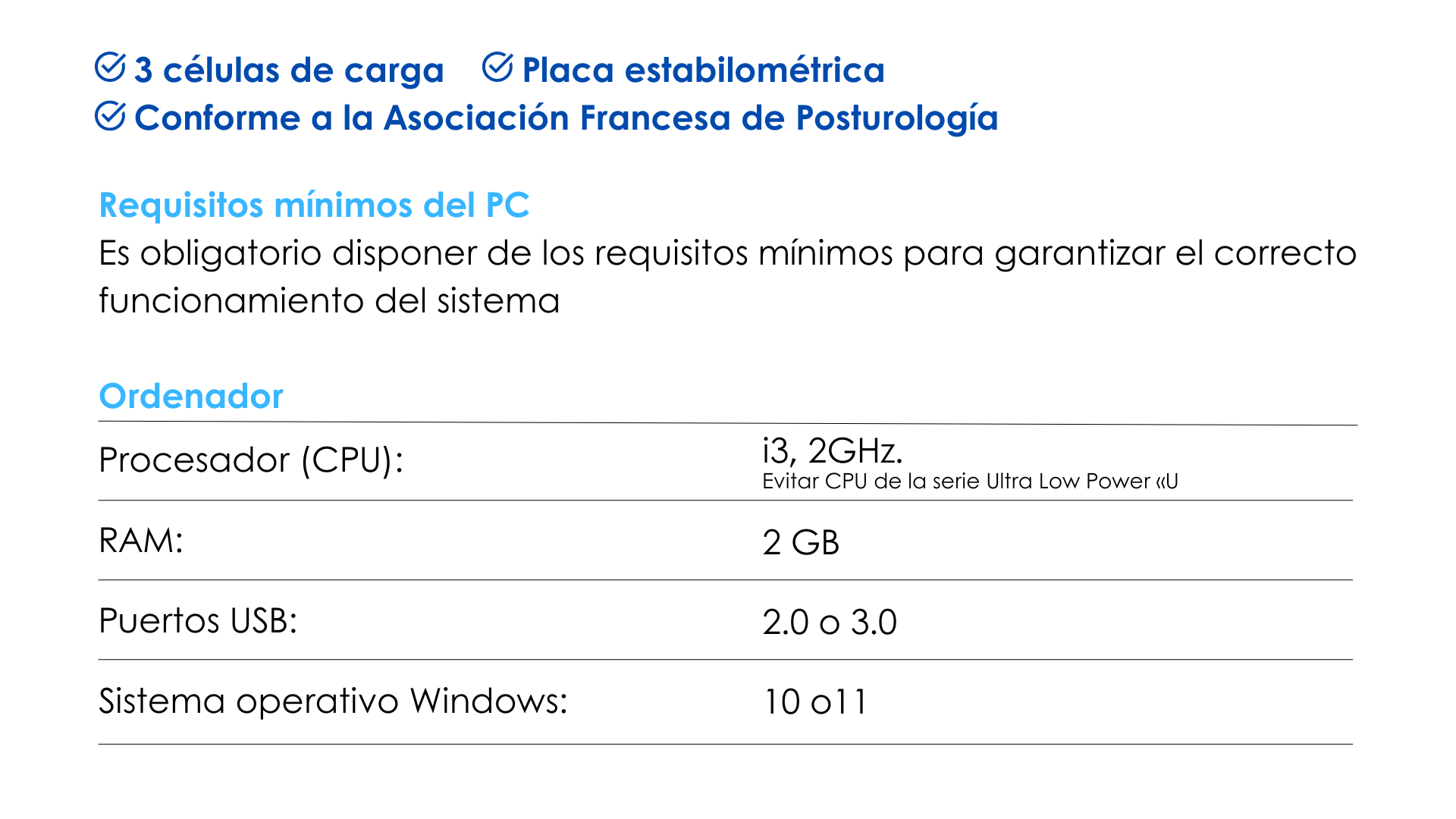
Minimum computer requirements
Processor (CPU): Intel i3 or equivalent, 2 GHz
(Avoid Ultra Low Power "U" series processors)
RAM: 2 GB
USB ports: USB 2.0 or USB 3.0
Operating system: Windows 10 or Windows 11
Software balancing:
PhysioSensing balance and posturography software
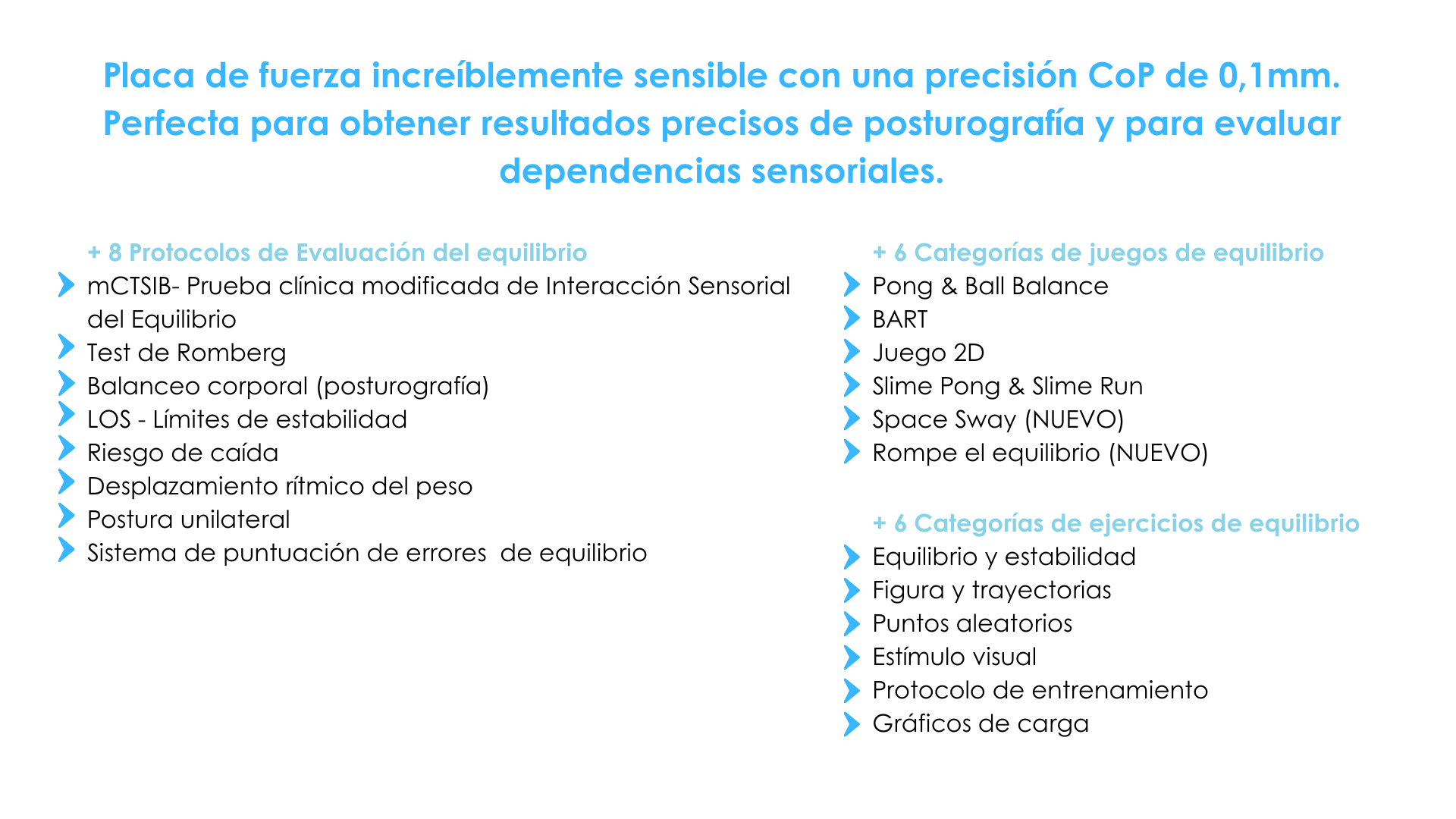
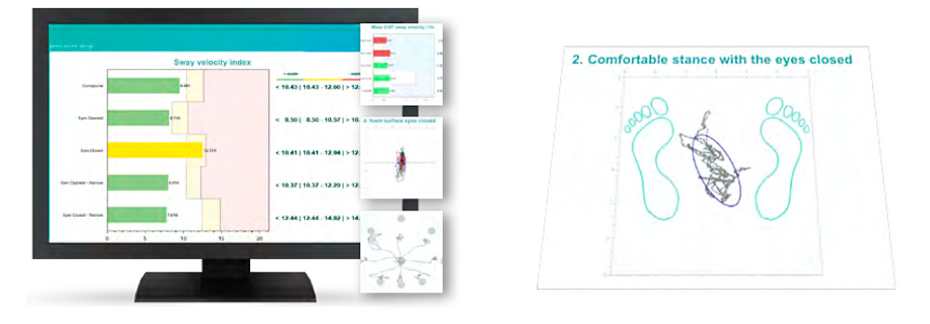
The PhysioSensing balance software enables the objective assessment of postural control and balance, as well as therapeutic training through visual biofeedback. Designed for clinical use, it offers quantifiable, reproducible, and comparable results, facilitating the monitoring of patient progress throughout treatment.
The system accurately analyzes the Center of Pressure (CoP), static and dynamic stability, and body oscillation patterns, making it a key tool in vestibular and neurological rehabilitation and fall prevention.
Balance assessment protocols
The software includes standardized clinical protocols for assessing balance and postural control:
mCTSIB – Modified Clinical Balance Sensory Interaction Test
Romberg test
Body balance (posturography)
LOS – Stability Limits
Fall risk assessment
Rhythmic displacement of weight
Unilateral stance
Balance Error Scoring System (BESS)
All protocols generate graphical reports and objective results to support diagnosis and clinical follow-up.
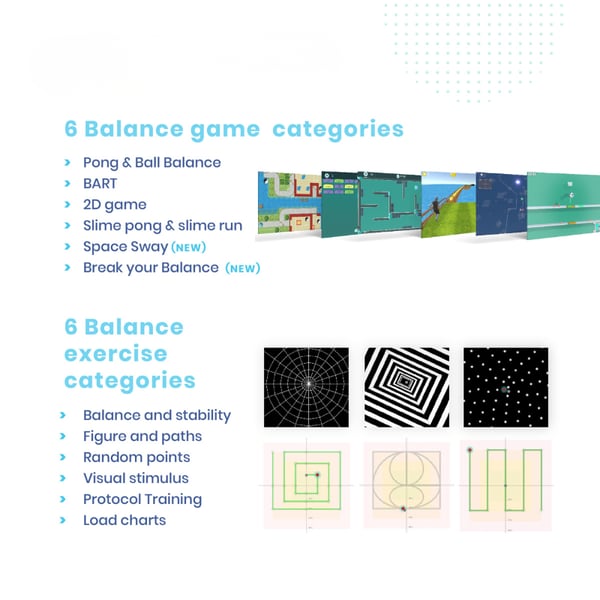
Therapeutic balance exercises and games
In addition to the assessment, the software incorporates interactive exercises and therapeutic games based on visual biofeedback, which improve patient adherence and optimize treatment results:
Balance games
Pong & Ball Balance
BART
2D Game
Slime Pong & Slime Run
Space Sway
It breaks the balance
Exercise categories
Balance and stability
Figures and trajectories
Random points
Visual stimulus
Training protocols
Load graphs
Benefits of the software for the clinic
Objective and standardized evaluation of balance
Accurate analysis of the Center of Pressure (CoP)
Comparative monitoring of patient evolution
Real-time visual biofeedback
Improved therapeutic adherence
Ideal for physiotherapy, vestibular rehabilitation and neurorehabilitation
The software doesn't just assess balance; it also proposes a series of exercises to improve body balance through training. These are as follows:
- In sagittal and anteroposterior exercises , the patient must achieve the equilibrium position in the sagittal plane or in the anteroposterior plane.
- In the spider web, tunnel, dot pattern, and bar pattern exercises , the goal is to maintain a balanced position despite the visual stimulus.
- In the Route Bars, Route Spiral, Route Square and Route Maze exercises, the objective is to travel the routes within their limits with the center of pressure, following the red dots.
- In the Square, Circle, Eight and Spiral exercises , the patient must reach all the points arranged in the manner indicated in the name.
- In the Follow the Dot and Moving Route exercises , the objective is to reach the moving red dot and follow it within your tolerance range.
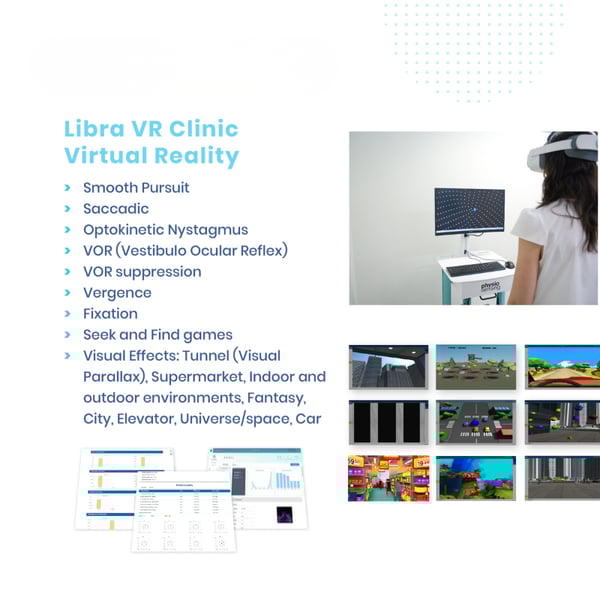
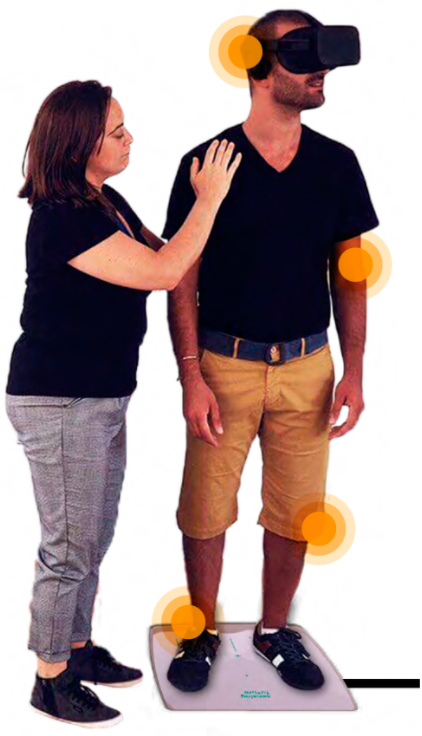
Virtual Reality (VR) software for vestibular rehabilitation
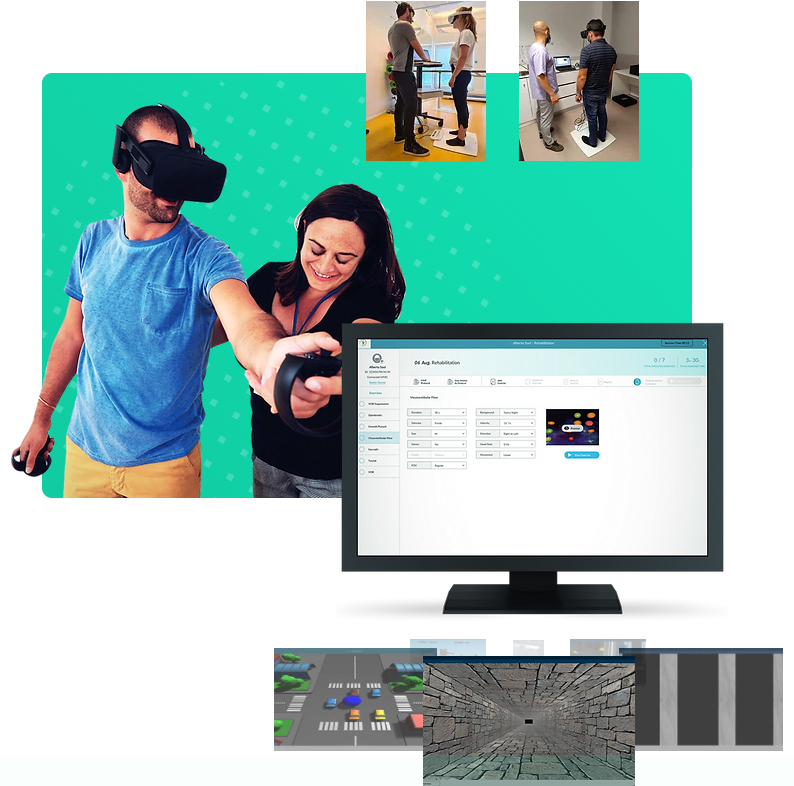
The PhysioSensing Virtual Reality (VR) software is specially designed for the rehabilitation of vestibular, balance and oculomotor disorders, providing an immersive, controlled and clinically oriented environment.
The system allows for personalized therapies, the creation of custom protocols, and objective monitoring of patient progress through tests and Virtual Reality exercises specifically developed for vestibular rehabilitation.
Strengths of the Virtual Reality system
Immersive stimulation : Virtual environments that train sensory adaptation and postural control.
Digital technology-based therapy : Integration of VR to optimize rehabilitation processes.
Supervised monitoring : Allows for the evaluation of results and the progressive adjustment of exercises.
Based on clinical evidence : Designed to meet the needs of physiotherapists and vestibular therapists.
Objectifiable and reproducible : Possibility of creating customized protocols and comparing results between sessions.
Rehabilitation exercises in Virtual Reality
PhysioSensing allows for software customization and the generation of automatic clinical reports, incorporating a wide variety of visual, vestibular, and oculomotor stimulation exercises, including:
Soft pursuit
Saccadic movements
Optokinetic stimulation
Nystagmus
Vestibulo-ocular reflex (VOR)
VOR Removal
Supermarket effect and visual parallax
Verages
Fixation exercises
Visual search and location games
These exercises allow work on sensory integration, visual stability and oculomotor control, which are fundamental in vestibular rehabilitation.
Warranty:
The device has a 2-year warranty.







.png)