





Differential Technologies

Fisaude Occasion

SUMMER SALE

Our Kinefis products

News

Offers

Outlet

Fisaude Tech Academy
Physiotherapy
Chiropody
Aesthetics, dermocosmetics and aesthetic medicine
Wellness, quality of life and body care
Odontology
Medical equipment
Chinese traditional medicine
Clinical furniture
Therapeutic cabinets
Essential protection material for coronaviruses
Aerobics, fitness and pilates
Sports and games
Sanitary wardrobes
Veterinary
Orthopedics
Surgical instruments (clearance)
Physiosensing Rehab III Neurorehabilitation Platform: Pressure platform for balance assessment and training. Ideal for neurorehabilitation, physical rehabilitation, and posturography.
 Warranty is 2 years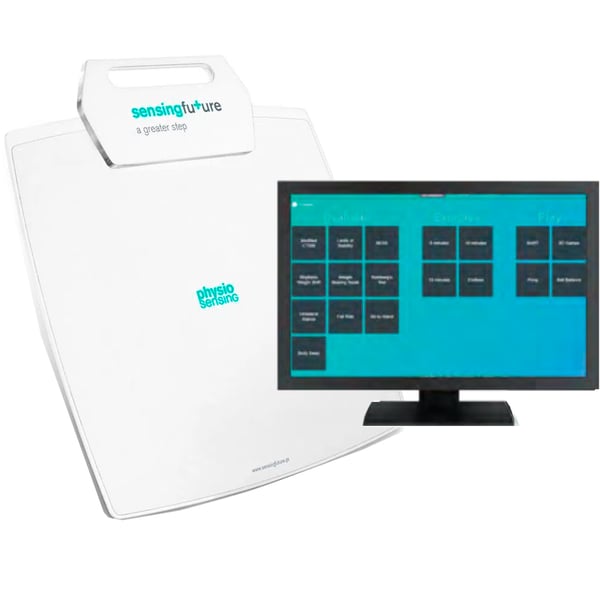
Description
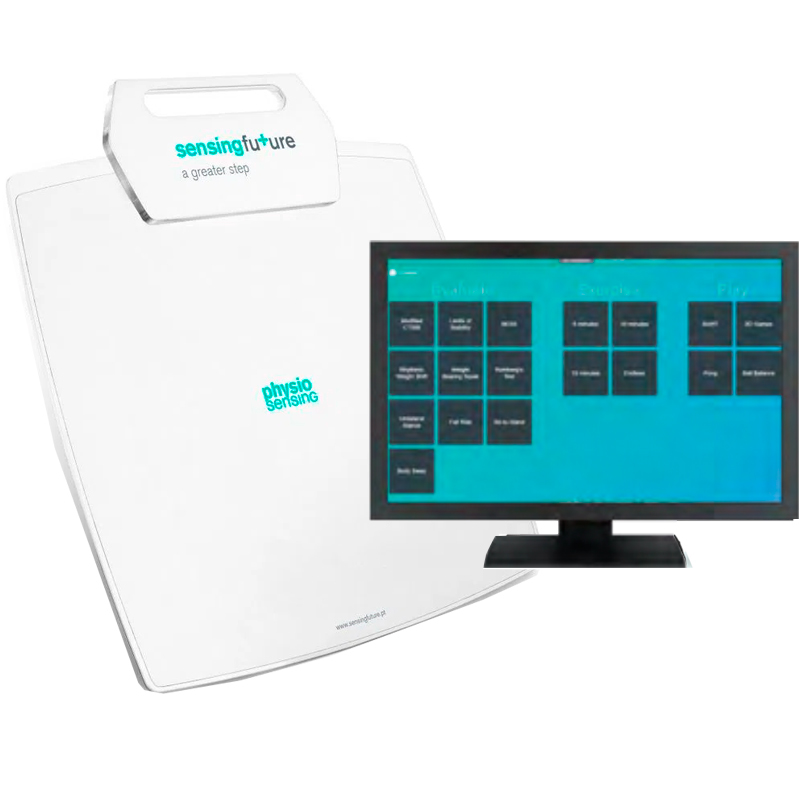
The PhysioSensing platform is the best example of the new generation of products for physical rehabilitation, balance improvement, neurorehabilitation, and postural health care. PhysioSensing is based on cutting-edge technology.
The Physiosensing Rehabilitation version is specifically designed to study how musculoskeletal disorders affect stability and balance. The platform delivers immediate and accurate results.
A 2-hour Zoom training session is included with the purchase of the platform, carrying bag, and foam insert.
Treatment areas:
Many neuromuscular injuries affect patients' balance. The PhysioSensing Rehab III platform allows for the assessment and analysis of patients' balance, enabling targeted interventions to improve it. All of this is accomplished with a single platform that performs the assessment in a minimally invasive way for patients and provides immediate, accurate results for the healthcare professional.
With the Physiosensing Rehabilitation platform you can analyze:
- Balance: A platform that displays the center of body weight on a screen. Clinical balance assessment helps prevent falls and determine the underlying causes of balance disorders. The benefits of using force platforms for balance assessment stem from their ability to measure the Center of Pressure (CoP).
- Baropodometry: Plantar pressure mapping is a method for measuring pressures on the surface of the foot, whether standing still or in motion. Static and dynamic analysis is performed on a baropodometric platform, which measures the pressure exerted by the feet while standing or walking.
- Posturography: Computerized posturography systems use force platforms to measure a patient's sway by determining the movements of the instantaneous center of pressure (CoP). The collected CoP data can be visualized through a statokinesiogram and a stabilogram.
- Visual biofeedback: Visual biofeedback (VB) is a rehabilitation method that can be used during static balance training. It provides the patient with visual feedback on the position of their center of gravity while standing on a platform. VB stimulates motivation, provides proprioceptive information, simulates body movements, and offers valuable insights for healthcare professionals.
Pressure platform:
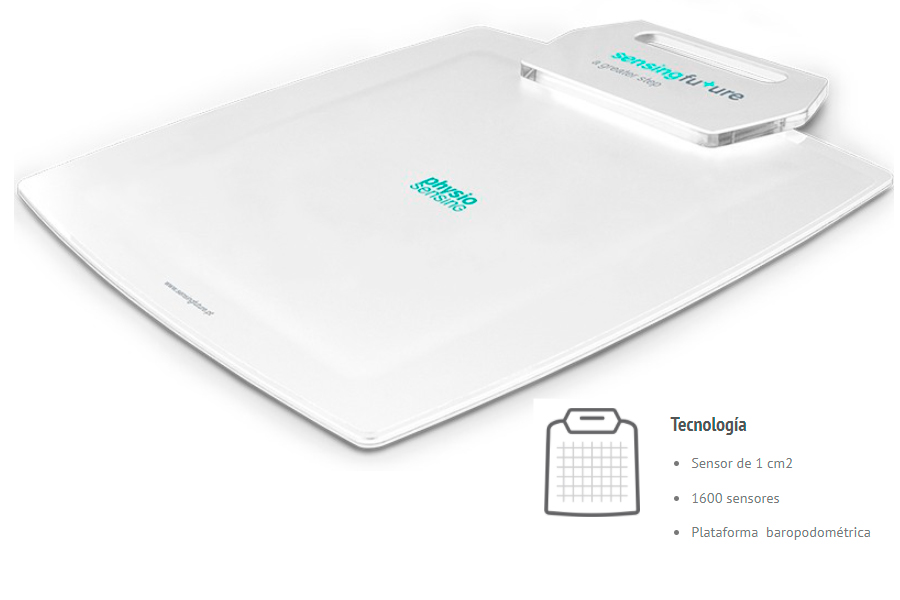
The PhysioSensing pressure platform stands out for its accuracy (thanks to its more than 1600 sensors), its portability (weighing just over four kilograms), and its low cost . Furthermore, when combined with podometry/balance software, it becomes an invaluable tool for clinical practice and baropodometric measurements.
Technical specifications:
- CE Class I medical device according to directive 93/42/EEC
- Portable Type
- Dimensions: 61 x 58 x 1 cm
- Weight 4 kg
- Active Surface 40 x 40 cm
- Number of sensors: 1600
- Sensor size 1 x 1 cm
- Sensor type: Resistive
- Sensor lifespan: over 1,000,000 actuations
- Maximum pressure (each sensor) 100 N/cm2
- Temperature range from 0ºC to 60ºC
- USB connection / power
- Frequency 100 Hz (100 samples/second)
PC Requirements
- i3 CPU processor, Quad-Core, with 2GHz
- 4 GB RAM
- USB 2.0 or 3.0 ports
- Windows 7, 8, 10 (32 or 64-bit) Operating System
Podometry software included in Rehab III:
The podometry software allows the professional to perform a triple measurement of plantar pressure:
- Static analysis
- Dynamic analysis (gait)
- Postural analysis
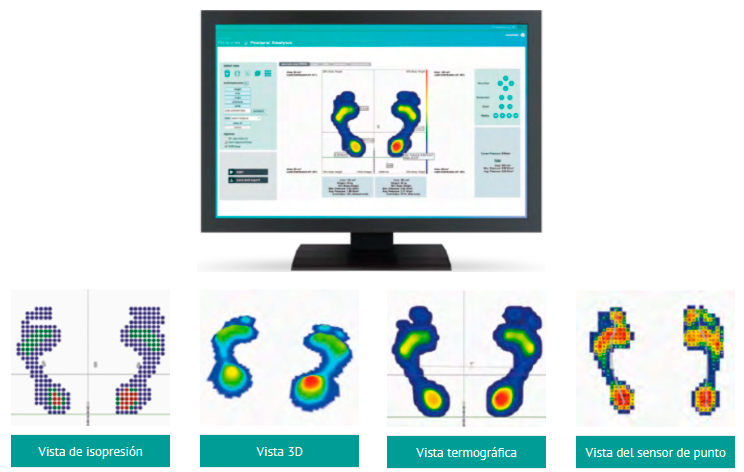
Thanks to its powerful software, it allows the creation of a complete plantar pressure map in which the following can be calculated:
- Static mapping with center of pressure
- Average and maximum pressure calculations
- Weight distribution
- Measurement possibilities (length, angle, pressure, area)
- Comparison of exams
- Statokinesigram and Stabilogram
In addition to static and postural analysis of plantar pressure, PhysioSensing PODO will allow you to perform dynamic analyses in which the distribution of plantar pressure on the platform can be measured during a cycle of one or four steps.
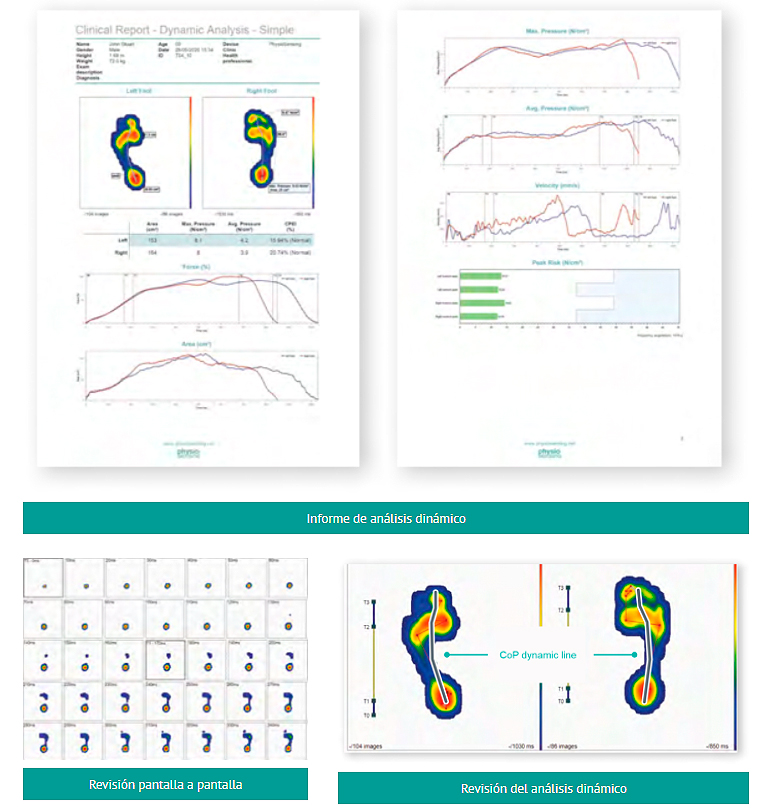
Analyses in which the following aspects can be assessed:
- CPEI
- CoP line
- Graphs of force, area, pressure, and speed
- Peak Risk
- Phases of the gait cycle
Balancing Software Included in the Rehab III Platform:
Balance software is a powerful tool for assessing and training balance. Within the analysis area, the software is able to evaluate:
mCTSIB – Modified Clinical Test of Sensory Integration and Balance and Romberg Test
This protocol allows the measurement of static balance in four sensory conditions: stable surface and eyes open; stable surface and eyes closed; unstable surface and eyes open; and unstable surface and eyes closed.
Body balance
You can create a custom posturography. Define the initial conditions and obtain the variation of CoP, ML, and AP over time. It also includes more than 30 parameters derived from a posturographic examination, including Fourier analysis.
Limits of Stability (LOS)
Perhaps the most widely used protocol for balance assessment. This protocol quantifies directional control and the maximum distance the patient can reach with their center of pressure in eight different directions.
Risk of falling
Static balance is measured under four conditions: comfortable posture with eyes open and eyes closed, and a narrow posture with eyes open and closed. After the test, the oscillation velocity index value is displayed, providing a prediction of fall risk.
Rhythmic weight shift
Use the (Rhythmic Weight Shift) protocol to assess the ability to transfer the center of pressure rhythmically in the sagittal and anteroposterior planes, at three different speeds.
Unilateral stance
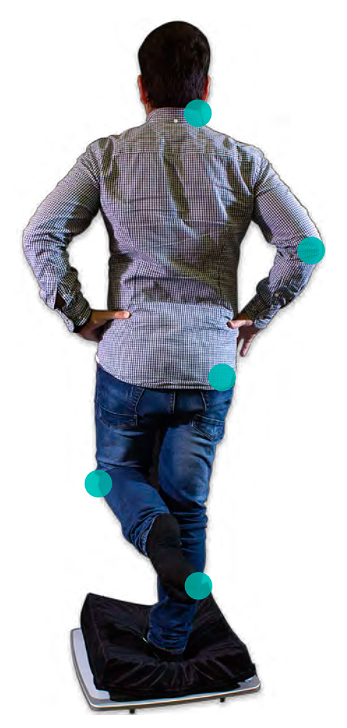
To measure balance under four conditions: left foot raised with eyes open, left foot raised with eyes closed, right foot raised with eyes open, and right foot raised with eyes closed.
Balance Error Scoring System
The BESS protocol allows measuring postural stability with eyes closed in three different positions on two types of surface (firm and unstable): two feet together, single-leg position and tandem.
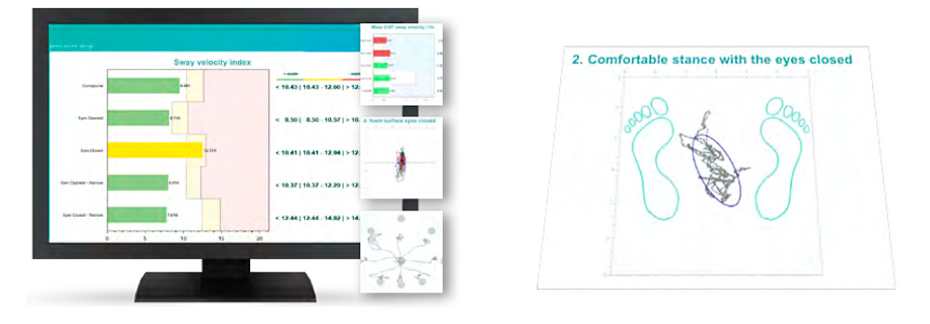
The software doesn't just assess balance; it also proposes a series of exercises to improve body balance through training. These are as follows:
- In sagittal and anteroposterior exercises , the patient must achieve the equilibrium position in the sagittal plane or in the anteroposterior plane.
- In the spider web, tunnel, dot pattern, and bar pattern exercises , the goal is to maintain a balanced position despite the visual stimulus.
- In the Route Bars, Route Spiral, Route Square and Route Maze exercises, the objective is to travel the routes within their limits with the center of pressure, following the red dots.
- In the Square, Circle, Eight and Spiral exercises , the patient must reach all the points arranged in the manner indicated in the name.
- In the Follow the Dot and Moving Route exercises , the objective is to reach the moving red dot and follow it within your tolerance range.
Software comparison:
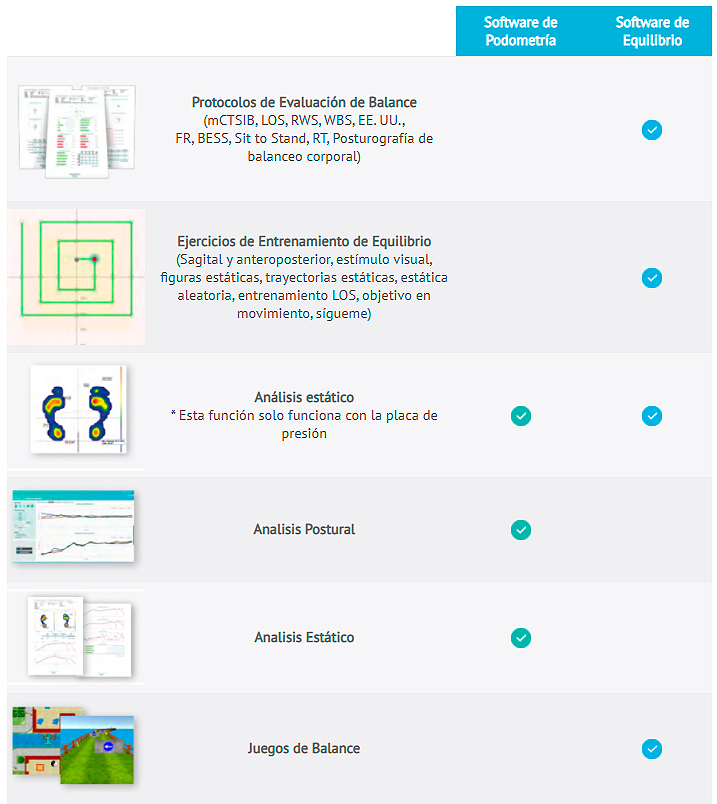
Warranty:
The device has a 2-year warranty.
Attached files
 Manual_Software_PS05_EN.pdf
Spare parts and accessories for this product
-

- Physiosensing Rehab III Neurorehabilitation Platform Carrying Bag
- 200,00 €
- Add to Basket
- Shipping in 3-5 days approx.
Reviews
4,9


11 reviews
 loading reviews...

Andrea C.
Spain
15/05/2024
Nicolás C.
Spain
09/05/2023
La plataforma abre nuevos horizontes que no conocía. Es una buena herramienta para tratar a mos pacientes y mejorar su motivación y adherencia al tratamiento.
María Yesenia
Spain
09/05/2023
Muy a la vanguardia, muy practica
Andrea L.
Spain
09/05/2023
Es una herramienta muy útil que debería darse a mas conocer tanto para pacientes neurológicos como en patologías músculo-esqueléticas
Lenira C.
Spain
08/05/2023
Es fácil e intuitiva
Francisco Borja M.
Spain
08/05/2023
Me parece muy completa y muy competitiva a nivel de precio-calidad.
Nuno C.
Spain
07/05/2023
Buena
Vanessa R.
Spain
06/05/2023
Tecnología muy interesante

Iria R
Spain
06/05/2023
ES UNA BUENA HERRAMEINTA PARA EVALUAR
Valentina F.
Spain
05/09/2022
Ideal, gran adquisición para mi clínica







Es muy completo