





Differential Technologies

Fisaude Occasion

SUMMER SALE

Our Kinefis products

News

Offers

Outlet

Fisaude Tech Academy
Physiotherapy
Chiropody
Aesthetics, dermocosmetics and aesthetic medicine
Wellness, quality of life and body care
Odontology
Medical equipment
Chinese traditional medicine
Clinical furniture
Therapeutic cabinets
Essential protection material for coronaviruses
Aerobics, fitness and pilates
Sports and games
Sanitary wardrobes
Veterinary
Orthopedics
Surgical instruments (clearance)
PhysioSensing Vestibular: V Vertigo force platform and balance software for vestibular rehabilitation
 Warranty is 2 years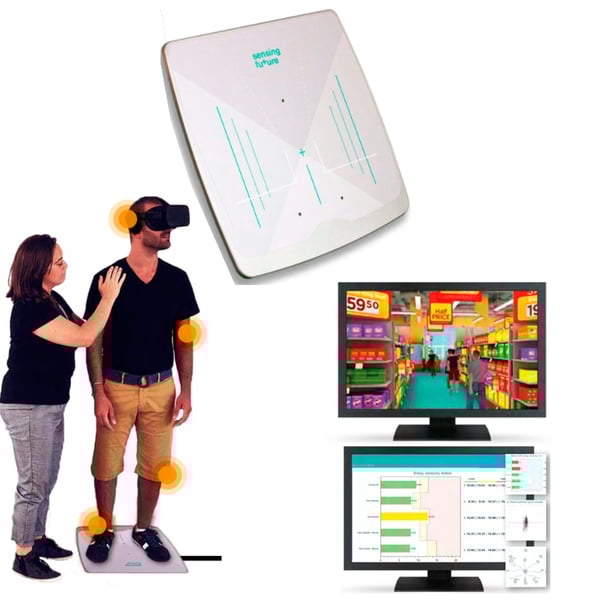
Description
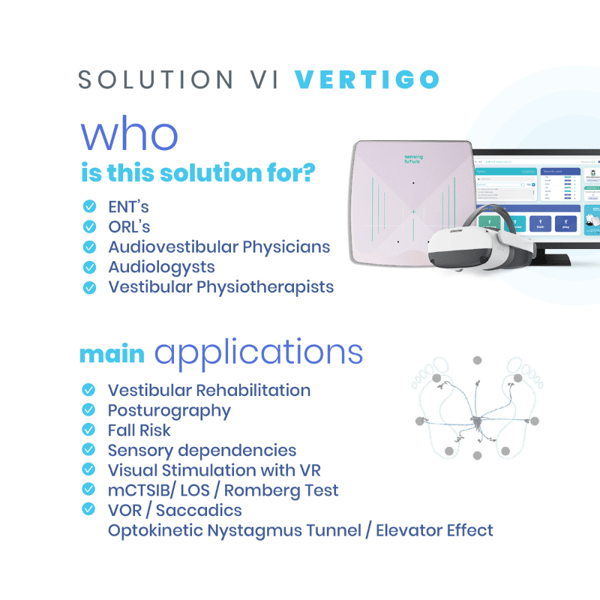
PhysioSensing is part of a new generation of products for physical rehabilitation, balance improvement, and postural health, based on cutting-edge technology. The PhysioSensing Vestibular version is specifically designed to assess, analyze, treat, and improve vestibular, balance, and oculomotor disorders.
The platform becomes the ideal solution for both patients and healthcare professionals, as it achieves immediate and lasting results and the version can be adapted to the needs.
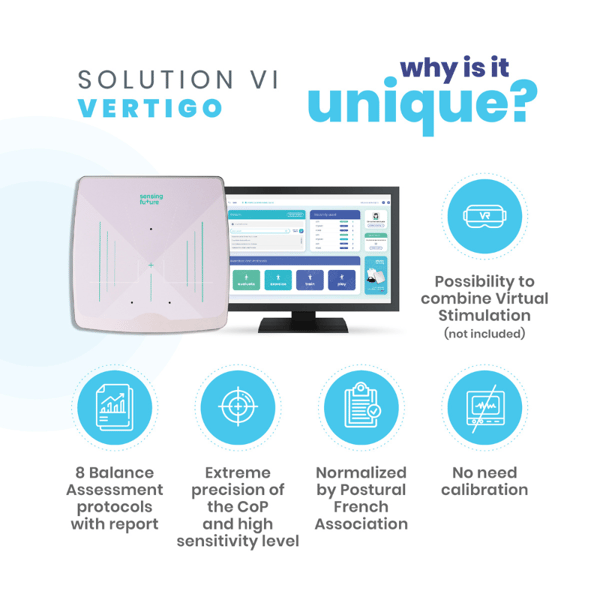
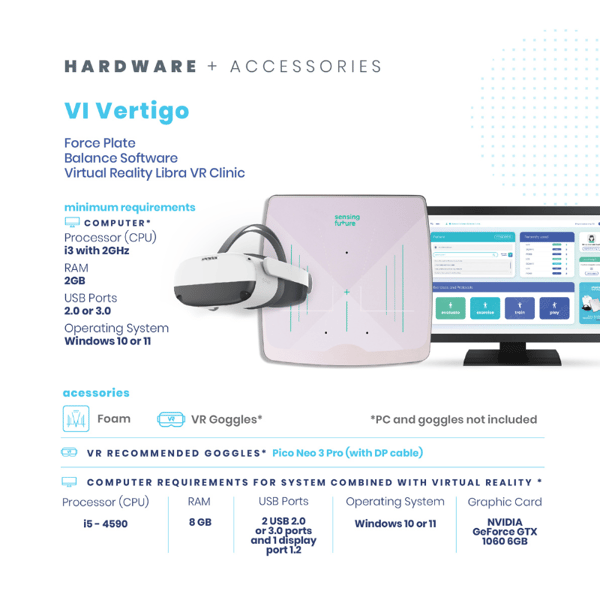
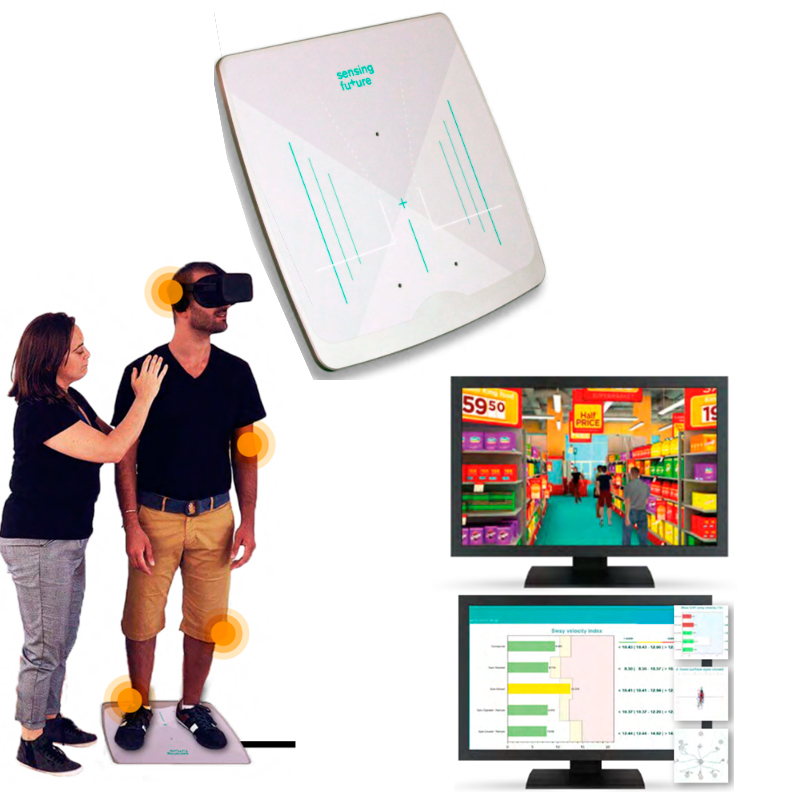
Thus, the Physiosensing Vestibular version consists of the combination of a stabilometric platform and balance software , and would give us the option of acquiring the VII vertigo package, which includes Virtual Reality Libra VR Clinic and Pico Neo 3 Pro VR glasses.
When the platform includes virtual reality software, the VR headset is included . A 2-hour Zoom training session is included with the purchase of the platform , along with a carrying bag (the latter is included with all platforms except VII VERTIGO).
Treatment areas:
Balance assessment: A platform that displays the center of body weight on a screen. Clinical balance assessment helps prevent falls and determine the underlying causes of balance disorders. The benefits of using force platforms for balance assessment stem from their ability to measure the Center of Pressure (CoP).
Posturography: Computerized posturography systems use force platforms to measure a patient's sway by determining the movements of the instantaneous center of pressure (CoP). The collected CoP data can be visualized through a statokinesiogram and a stabilogram.
Virtual Reality: In the last decade, Virtual Reality (VR) has become established as a therapeutic tool for the rehabilitation of neurological patients. Virtual reality involves simulation and real-time interactions between sensory, motor, and cognitive channels. Virtual reality can be configured to be highly immersive, as the environment appears real and three-dimensional. Virtual reality provides an ideal environment for studying balance control optimization strategies.
Visual biofeedback: Visual biofeedback (VB) is a rehabilitation method that can be used during static balance training. It provides the patient with visual feedback on the position of their center of gravity while standing on a platform. VB stimulates motivation, provides proprioceptive information, simulates body movements, and offers valuable insights for healthcare professionals.
Force platform:
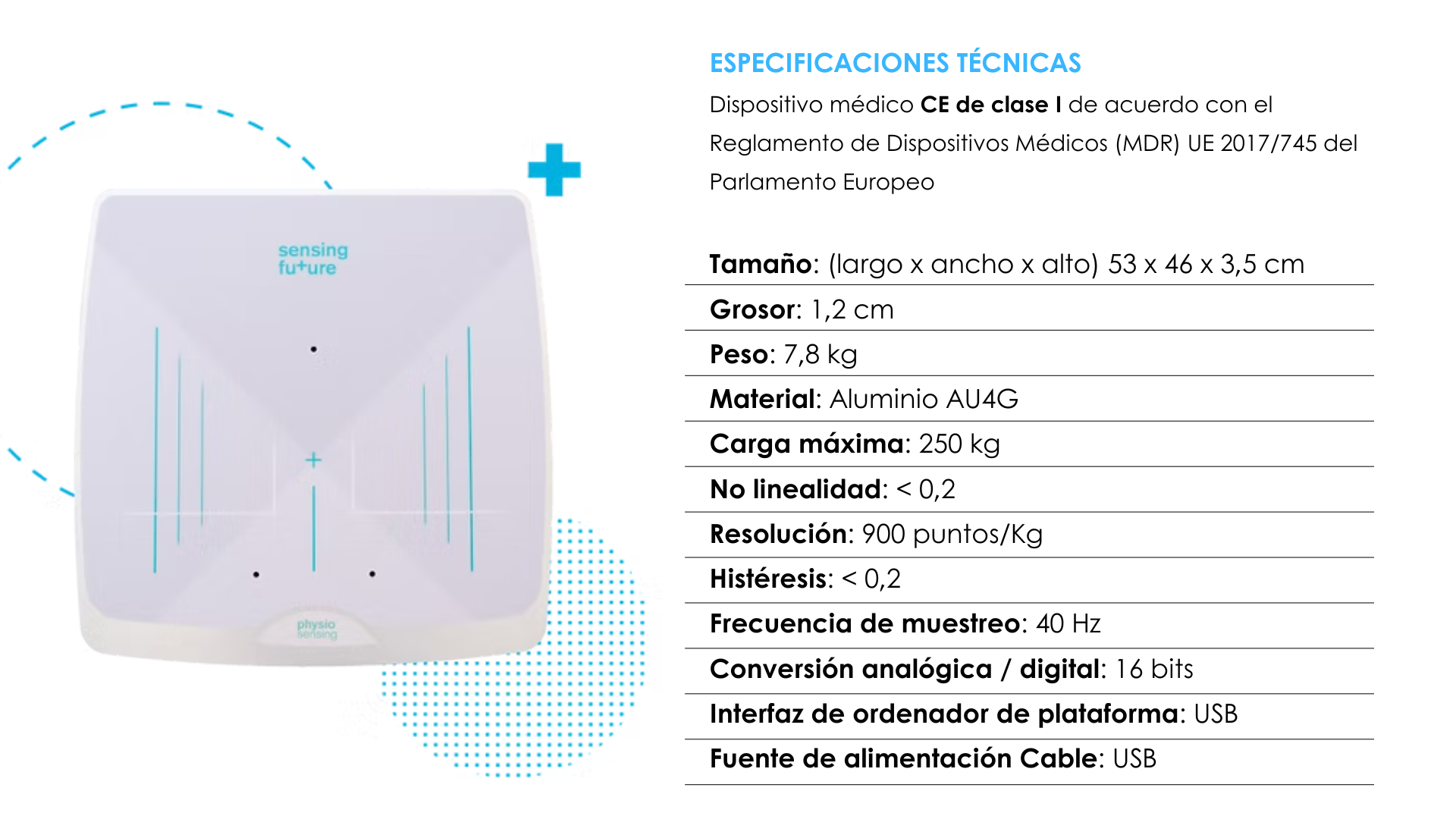
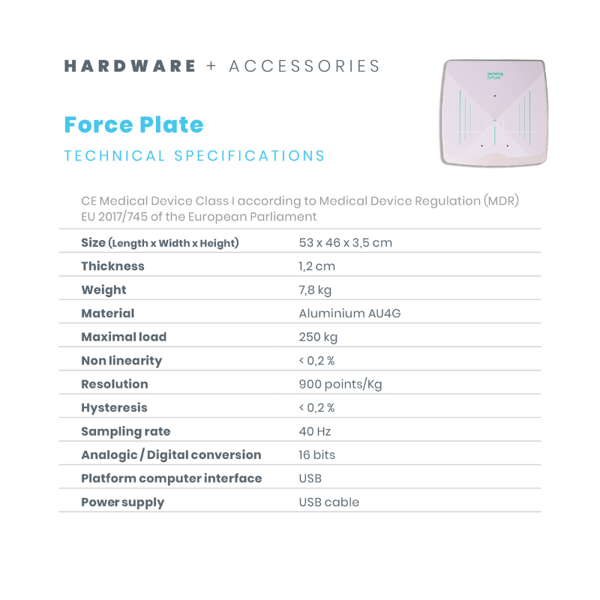
Technical specifications:
- CE Class I medical device according to directive 93/42/EEC
- Size: (Length x Width x Height) 53 x 46 x 3.5 cm
- Weight 7.8 kg
- Material
- Aluminum AU4G
- Maximum load 128 kg
- Non-linearity < 0.2%
- Resolution 900 points/Kg
- Hysteresis < 0.2%
- Sampling frequency Adjustable from 5 Hz to 40 Hz
- Analog to digital conversion 16 bits
- Platform computer interface USB
- Power supply USB cable
PC Requirements
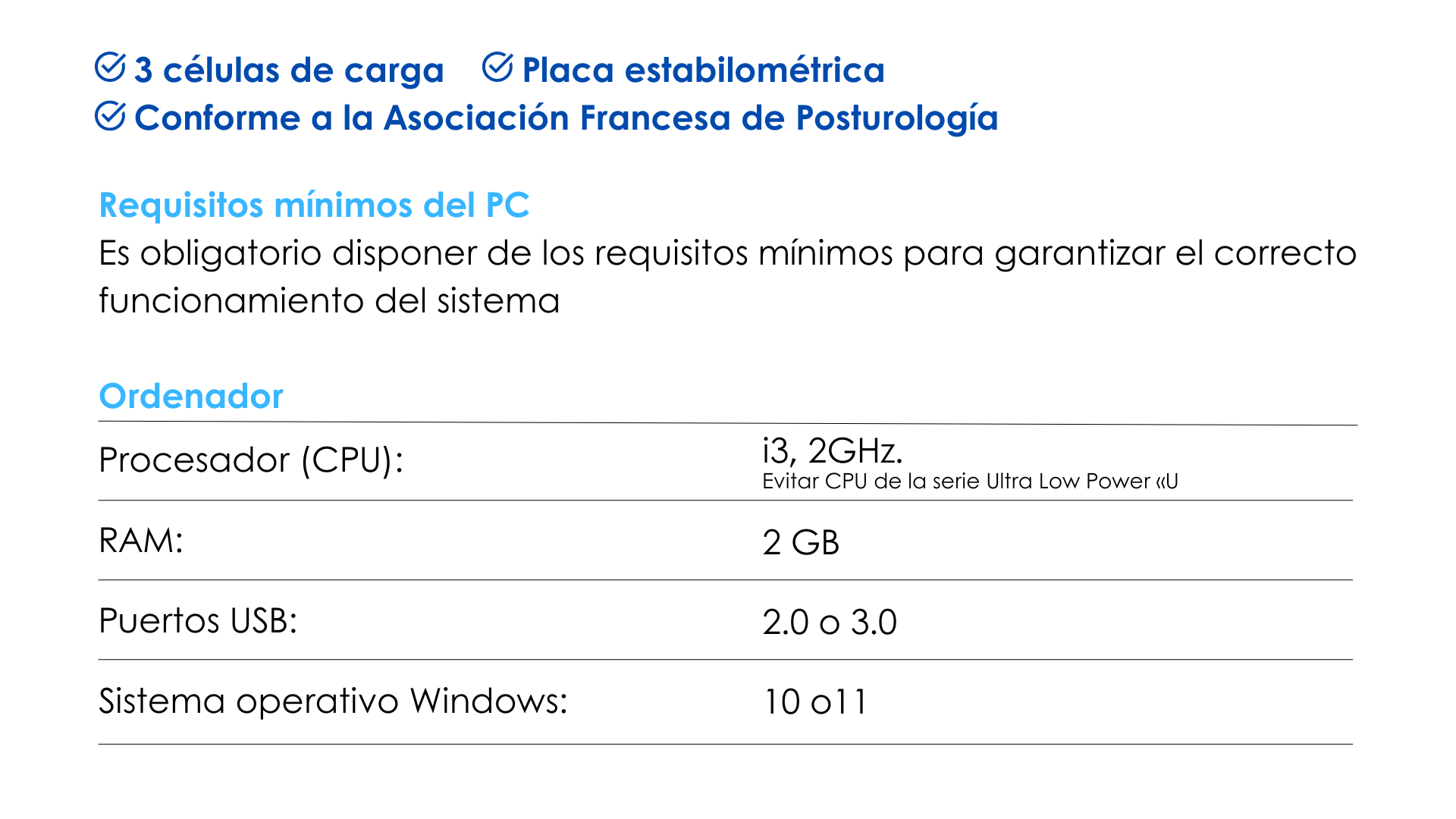
- CPU Processor i3 with 2GHz
- RAM 2 GB
- USB Ports 2.0 or 3.0
- Operating System Windows 7, 8, 10 (32 or 64-bit)
Software balancing:
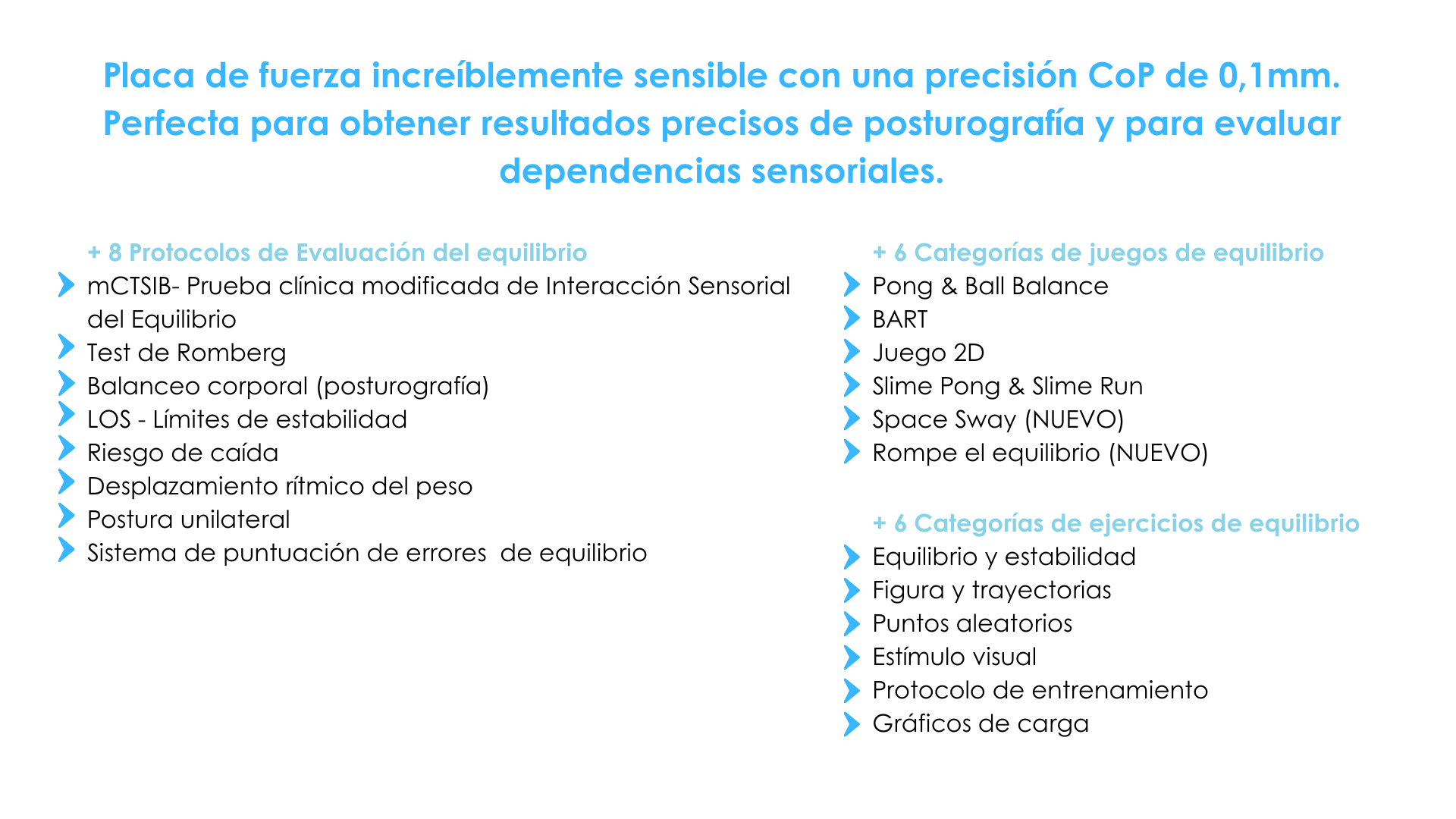
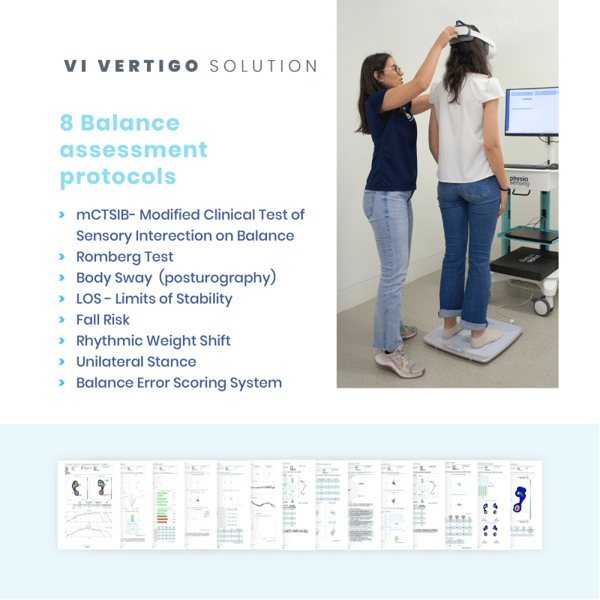
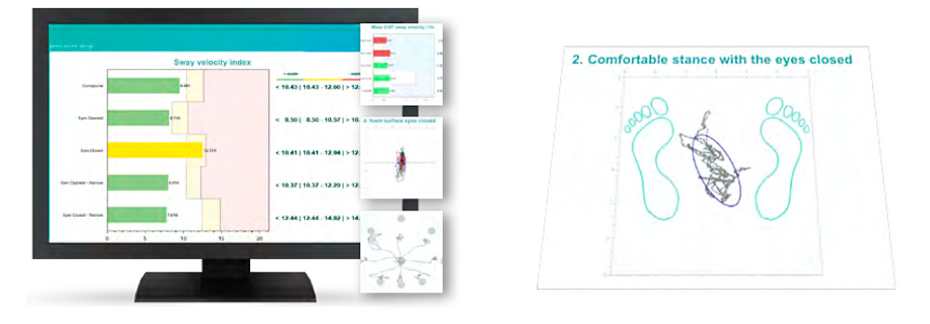
Balance software is a powerful tool for assessing and training balance. Within the analysis area, the software is able to evaluate:
mCTSIB – Modified Clinical Test of Sensory Integration and Balance and Romberg Test
This protocol allows the measurement of static balance in four sensory conditions: stable surface and eyes open; stable surface and eyes closed; unstable surface and eyes open; and unstable surface and eyes closed.
Body balance
You can create a custom posturography. Define the initial conditions and obtain the variation of CoP, ML, and AP over time. It also includes more than 30 parameters derived from a posturographic examination, including Fourier analysis.
Limits of Stability (LOS)
Perhaps the most widely used protocol for balance assessment. This protocol quantifies directional control and the maximum distance the patient can reach with their center of pressure in eight different directions.
Risk of falling
Static balance is measured under four conditions: comfortable posture with eyes open and eyes closed, and a narrow posture with eyes open and closed. After the test, the oscillation velocity index value is displayed, providing a prediction of fall risk.
Rhythmic weight shift
Use the (Rhythmic Weight Shift) protocol to assess the ability to transfer the center of pressure rhythmically in the sagittal and anteroposterior planes, at three different speeds.
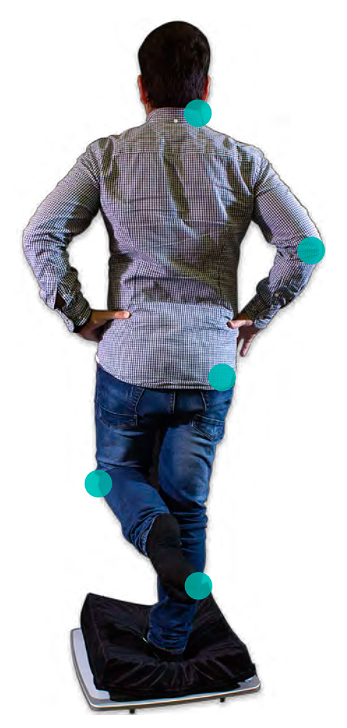
Unilateral stance
To measure balance under four conditions: left foot raised with eyes open, left foot raised with eyes closed, right foot raised with eyes open, and right foot raised with eyes closed.
Balance Error Scoring System
The BESS protocol allows measuring postural stability with eyes closed in three different positions on two types of surface (firm and unstable): two feet together, single-leg position and tandem.
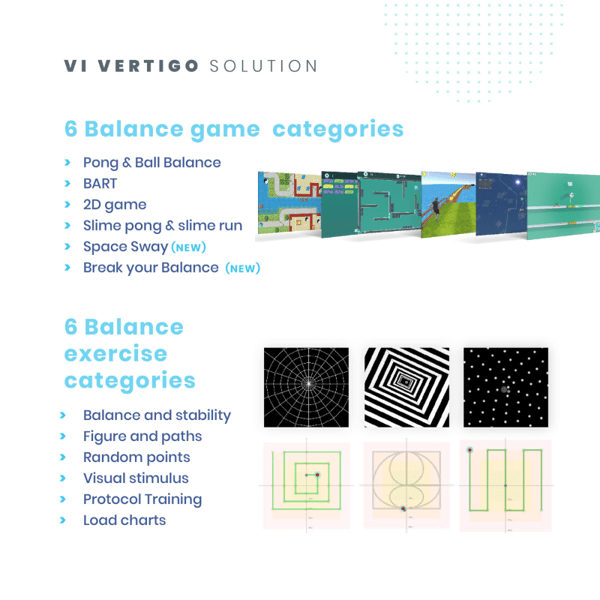
The software doesn't just assess balance; it also proposes a series of exercises to improve body balance through training. These are as follows:
- In sagittal and anteroposterior exercises , the patient must achieve the equilibrium position in the sagittal plane or in the anteroposterior plane.
- In the spider web, tunnel, dot pattern, and bar pattern exercises , the goal is to maintain a balanced position despite the visual stimulus.
- In the Route Bars, Route Spiral, Route Square and Route Maze exercises, the objective is to travel the routes within their limits with the center of pressure, following the red dots.
- In the Square, Circle, Eight and Spiral exercises , the patient must reach all the points arranged in the manner indicated in the name.
- In the Follow the Dot and Moving Route exercises , the objective is to reach the moving red dot and follow it within your tolerance range.
Virtual Reality (VR) Software:
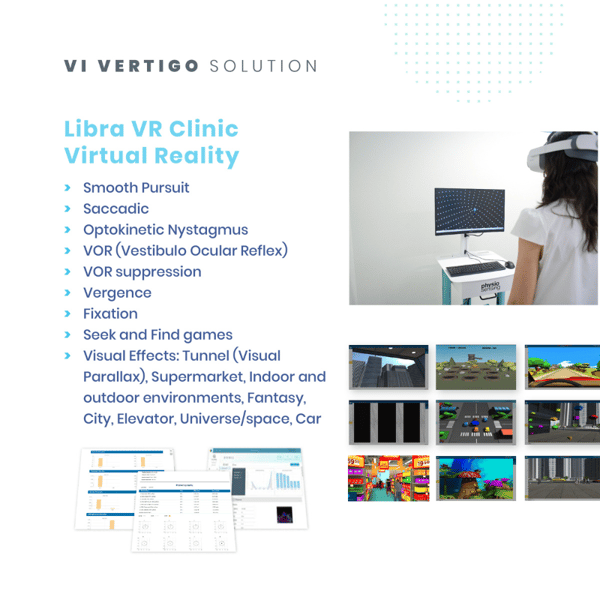
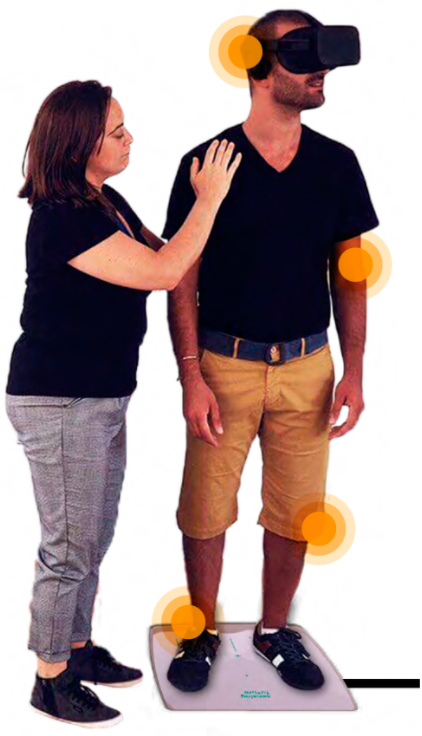
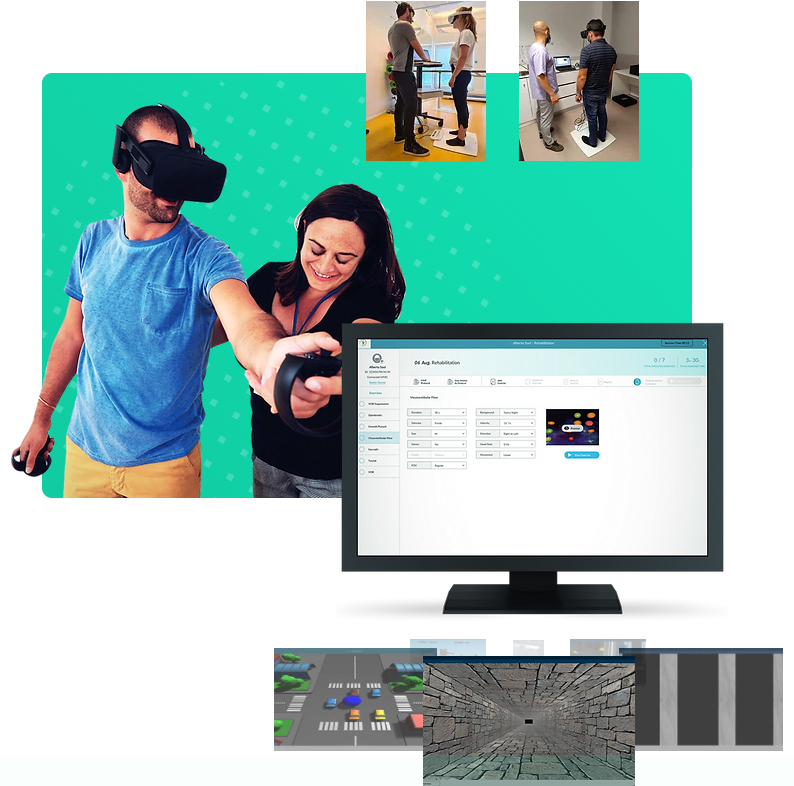
The virtual reality system is specifically designed to address vestibular, balance, and oculomotor disorders. It is ideal for monitoring, customizing, creating, and tracking various rehabilitation therapies through virtual reality tests and games specifically designed for patients with vestibular disorders.
Strengths:
Strengths:
- Immersive stimuli: Exciting and engaging virtual worlds train the patient's brain.
- Improved therapy: Through digital technology.
- Supervised monitoring: Allows for the evaluation and adjustment of exercises.
- Evidence-based and approved: Scientifically backed to meet the needs of therapists.
- Objectifiable and reproducible: Allows you to create your own protocols and compare the results.
Exercises:
PhysioSensing allows for software customization and the instant generation of comprehensive reports . It also features a range of exercises and immersive virtual reality stimulation , including:
- Soft pursuit
- Saccadic
- Optokinetic
- Nystagmus
- VOR
- VOR Removal
- Supermarket effect and visual parallax
- Vergence
- Fixation
- Search and find games
Warranty:
- The device has a 2-year warranty.
Attached files
 Manual_Software_PS05_EN.pdf
Spare parts and accessories for this product
-

- Pico Neo 3 Virtual Reality glasses compatible with the Physiosensing platform (includes connection cable)
- 1500,00 €
- Add to Basket
- Shipping in 3-5 days approx.
Reviews
4,8


6 reviews
 loading reviews...

Juan A.
Spain
09/03/2026
Melanie P.
Spain
22/05/2024
Llevo casi un año con ella y le he sacado mucha utilidad.

David G.
Spain
20/05/2024
Muy bien adaptado.
Pablo F.
Spain
16/05/2024
Muy interesante.
Melanie M.
Spain
22/09/2022
Muy bien, recomendable
Rocío S.
Spain
15/06/2022
Calidad-Precio inmejorables







Equipo muy interesante